
The heat is back on, but you are still wondering how long it will last. After another service call, it is reasonable to question whether your heat pump needs one more repair or whether you should start planning for replacement.
The repair history can help answer that question. A system that repeatedly loses heat for the same unresolved reason presents a different situation from one developing faults in several unrelated components. Neither situation is explained by the latest bill alone.
Repair is often worthwhile when the cause is clear and the work can restore dependable service. Replacement becomes more reasonable when major defects accumulate, suitable repairs are unavailable, or the equipment cannot meet the home’s heating and cooling needs.
This guide explains how recurring problems, backup heat, and the scope of a major repair affect that decision. Specialty Heating & Cooling provides heat-pump repair throughout the Portland area, starting with an assessment of the equipment and its symptoms.
Is the Same Problem Returning or Has Something Else Failed?
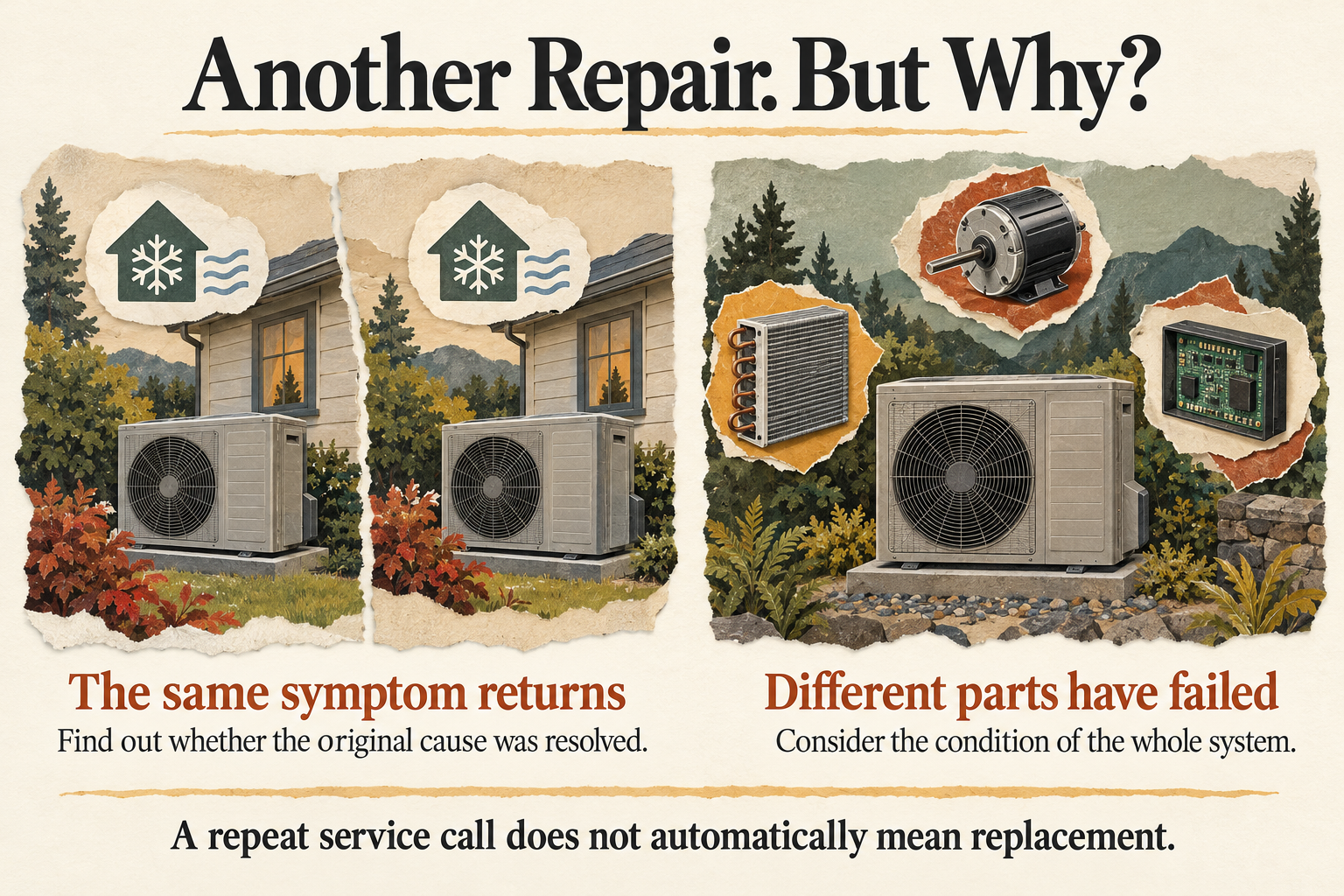
“It stopped heating again” describes what happened inside the house. But it does not identify what went wrong with the equipment.
An electrical fault, a refrigerant problem, or a malfunctioning control can produce similar complaints. When heating stops after a recent repair, the technician needs to establish whether the original fault returned or a different problem developed.
Consider a hypothetical system that loses refrigerant, receives service, and later loses heating capacity again. If the leak remains, another refrigerant addition will not resolve the source of the trouble. A lasting repair depends on locating the loss and determining whether it can be corrected.
Now consider a heat pump that needed a fan motor last year and has a damaged coil this year. Those may be separate failures. Their significance depends on the condition of the rest of the equipment and the expense of the next repair.
The unit’s repair history may help explain why the trouble keeps returning. If the same symptom returns, the cause may still be unresolved. If several components have developed faults, replacement may offer better value than another major repair.
Does Poor Heating Mean the Heat Pump Is Wearing Out?
A chilly room does not tell you whether a heat pump needs replacement. First, the assessment needs to distinguish normal operation from a fault and determine whether the equipment is delivering the heat it should.
Defrost Temporarily Changes How the System Operates
During heating, frost can collect on the outdoor coil. A heat pump’s defrost cycle briefly reverses operation to warm that coil and clear the frost.
That can temporarily change the temperature of the air delivered indoors. Persistent ice or a house that continues losing warmth needs further assessment. Carrier’s heating guide distinguishes normal defrost operation from problems such as restricted airflow, refrigerant loss, and a faulty reversing valve.
A defrost-related fault can be repairable. Ice on the outdoor unit, by itself, does not establish that the entire system has reached the end of its useful life.
Did the Heating Get Worse, or Has the House Never Been Warm Enough?
If your heat pump used to keep the house comfortable but now struggles, something has changed. A technician can check for a failed component or another problem reducing its heating output.
If the house has been difficult to heat every winter, the problem may extend beyond a repair. The heat pump may be too small for the home, the ducts may deliver too little warm air to certain rooms, or the house may lose heat faster than the system can replace it.
Fixing a broken part may get the heat pump running again while leaving those comfort problems unresolved. Before investing in a major repair, it helps to understand whether the existing system can heat the home adequately once repaired.
What Frequent Backup Heat Tells You
Backup heat can keep the house warm while making it less obvious that the heat pump itself is struggling. Understanding which heating arrangement you have helps explain both comfort and energy use.
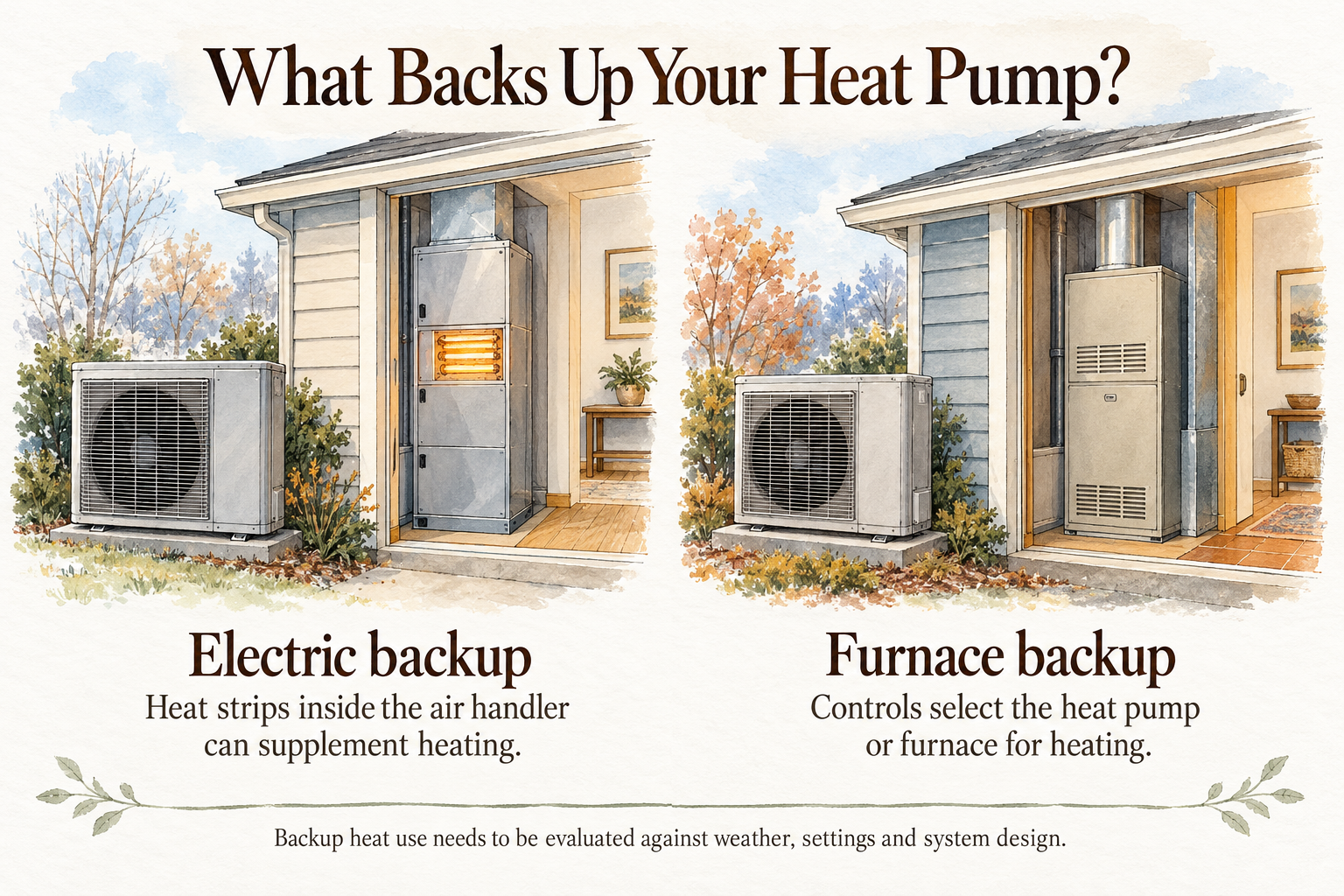
Electric Auxiliary Heat
Some ducted heat pumps have electric resistance heating elements inside the indoor air handler. These elements can supplement the heat pump during colder conditions, defrost, or temperature recovery, depending on the controls.
Electric resistance heat generally uses more electricity to deliver the same amount of warmth than a heat pump operating efficiently. Occasional use can be expected. Frequent auxiliary heat operation needs to be assessed alongside the weather, thermostat settings, and system design.
If electricity use rises while auxiliary heat appears more often, the assessment should establish whether the heat pump is contributing as intended. The house may remain comfortable even while resistance heat carries more of the workload.
A Furnace Paired With a Heat Pump
Other homes use a heat pump with a furnace. Often called a dual-fuel system, this arrangement switches heating sources according to its controls and operating conditions.
Furnace operation does not automatically mean the heat pump has failed. It may be the intended response to colder weather. Whether that operation is economical also depends on fuel prices and equipment performance.
A replacement comparison needs to identify whether the furnace will remain and how it will work with the proposed heat pump. Otherwise, the homeowner may be comparing proposals that provide different heating arrangements.
When Another Repair Can Be a Sensible Investment
A heat pump with one confirmed defect may have years of useful service left. Repair can be a sound choice when the remaining equipment is in good condition and the system has otherwise heated and cooled the home adequately.
For example, a failed sensor or control may interrupt operation without damaging the compressor or coils. The value of the repair depends on confirming that fault, using a suitable part, and testing the system afterward. Manufacturer guidance identifies electrical, control, airflow, and refrigerant problems among the issues assessed during heat-pump service.
Warranty coverage can also affect the decision. A covered replacement part may substantially reduce the expense, although labor, refrigerant, or other materials may remain the homeowner’s responsibility. The actual warranty terms determine what is covered.
Age belongs in the discussion, but it should not replace an assessment. An older heat pump with a limited repair need can present a better repair opportunity than newer equipment with extensive damage.
A repair recommendation is strongest when it explains what will be corrected and any known problems that will remain.
When Does a Major Heat Pump Repair Stop Making Sense?
Replacing a compressor or repairing a refrigerant leak can be expensive. Whether that work is worth the cost depends on the condition of the rest of the system and how well it is likely to perform afterward.
What Would Compressor Replacement Solve?
The compressor moves refrigerant through the system so heat can be transferred between indoors and outdoors. Replacing it involves more than installing a new part.
The work can require refrigerant recovery, removal of the failed compressor, installation, and preparation of the refrigerant circuit before the system is charged and tested. Any conditions that contributed to the failure also need attention.
The cost of replacing a heat-pump compressor includes the labor and refrigerant work needed to complete the repair. The compressor’s price alone does not show what you will pay.
Compressor replacement may be worthwhile when coverage reduces the bill and the coils and other components remain dependable. It becomes harder to justify when the system also has a leaking coil, significant corrosion, or other documented defects.
Can the Refrigerant Leak Be Repaired?
A heat pump does not use up refrigerant during normal operation. If refrigerant keeps running low, adding more will not fix the reason it is escaping.
The location of the leak affects the repair cost. Fixing an accessible connection may involve much less work than replacing a leaking coil. The estimate should identify where refrigerant is escaping and explain the work needed to stop the loss.
A repairable leak does not automatically justify replacing the system. An expensive coil replacement becomes harder to justify when other major components also need work.
Can the System Be Repaired With Compatible Parts?
A repair depends on finding a replacement part designed to work with the existing equipment. Physical fit alone is not enough; the part must also suit the system’s refrigerant and controls.
Price and delivery time matter too, especially when the home has no dependable heat. If a compatible part is unavailable, or the repair would be expensive and leave other significant problems unresolved, replacing the system may be the better investment.
How Would a New Heat Pump Improve Your Comfort?
A replacement should address the problems you experience at home. That might mean keeping rooms warm through colder Portland weather, reducing the need for electric backup heat, or providing more dependable summer cooling.
The new heat pump needs to be sized for the home’s heating and cooling needs. Its heating output during cold weather matters—not just its ability to keep the house comfortable on a mild day.
The assessment also needs to explain why certain rooms are uncomfortable. A cold bedroom may receive too little warm air because of leaking or restricted ducts. Replacing the heat pump alone can leave that problem unresolved. Specialty’s duct-sealing services can address leaks when they are part of the problem.
With ductless equipment, comfort depends on where the indoor units are installed and which rooms they serve. A unit in an open living area may not adequately heat a bedroom behind a closed door.
Specialty provides heat-pump installation and ductless system services. The recommendation should explain which arrangement suits your home and how it will address the comfort problems you want to solve.
What Goes Into a Fair Repair or Replacement Comparison?
Compare the full cost of each option, including the work involved and any known problems that would remain afterward.
| What you’re comparing | Repairing the existing heat pump | Replacing the heat pump |
|---|---|---|
| What the work accomplishes | Corrects the diagnosed fault. Other existing components remain in service. | Installs new equipment. The proposal identifies which indoor and outdoor components are included. |
| What the price includes | Parts, labor, and any refrigerant or related work needed to complete the repair. | Equipment, installation, removal of old equipment, and required supporting work and permits. |
| Other known problems | Problems outside the repair may still need attention and add future costs. | Some problems may be resolved by replacement. Duct or electrical issues may require additional work. |
| Warranty protection | Existing coverage may reduce the repair bill. The repaired part and labor may have separate warranty terms. | New equipment comes with its stated warranty. Labor coverage depends on the installation agreement. |
| Heating and cooling costs | Depends on how well the repaired system operates, including its use of backup heat. | Depends on the selected equipment and installation. Lower bills should be estimated, not assumed. |
| Time to restore service | Depends on parts availability and the work required. | Depends on equipment availability, installation scheduling, and any required approvals. |
Past repair bills can reveal recurring problems, but the money already spent should not decide your next move. What matters now is the cost of the proposed repair and whether it is likely to leave you with dependable heating and cooling.
A new heat pump may cost less to run, especially if it reduces the use of electric backup heat. The savings estimate should reflect your home’s heating needs, temperature settings, and electricity rates. If a furnace supplies backup heat, its fuel costs belong in the comparison too.
Rebates can lower the installation cost when your household and equipment qualify. Only a confirmed rebate amount should be deducted from the price; an advertised “up to” amount may not apply to your project.
If replacement makes sense, Specialty’s financing options can help spread the upfront cost into payments.

Portland Installation Details That Can Affect the Decision
A replacement project can involve changes beyond the heat pump itself. The property’s jurisdiction and outdoor equipment location can influence the scope.
Permits and Electrical Work
The City of Portland lists heat pumps and mini-splits among projects requiring a residential mechanical permit. It also states that most mechanical equipment projects require an electrical permit. Portland’s residential mechanical permit guide explains the applicable process.
Electrical requirements depend on the replacement equipment and existing installation. A change in backup heating can affect electrical demand, so the proposal needs to account for the equipment actually being installed.
Homes in Tigard or other surrounding jurisdictions follow the requirements applicable to their location. A Portland mailing address alone should not be used to establish the permitting authority.
Outdoor Placement and Noise
Portland has rules about where outdoor heat pumps can be installed, including restrictions near the front property line and conditions for placement along the sides or rear of a property. These rules can affect whether a replacement unit can stay in the existing location.
The unit’s distance from neighboring homes matters for noise, too. Portland’s noise standards limit the sound reaching another property, with stricter limits at night.
Choosing quieter equipment can help, but its sound rating is only part of the assessment. The installation location also affects how much noise neighbors hear.
Heat Pump Repair or Replacement Questions
Is It Worth Repairing a 15-Year-Old Heat Pump?
It can be. A limited repair may make sense when the system has otherwise been dependable and suitable parts are available. An expensive repair is less attractive when several components also need work. The equipment’s condition provides more useful guidance than age alone.
Can I Replace Only the Outdoor Heat Pump?
Sometimes, provided the replacement is compatible with the indoor equipment and meets applicable requirements. Refrigerant type, controls, and manufacturer specifications all matter. A complete system replacement may be necessary when a suitable match is unavailable.
Does Frequent Auxiliary Heat Mean I Need a New Heat Pump?
No. Auxiliary heat can operate as intended during colder weather or other conditions determined by the controls. A change in how often it runs may indicate a service or setup problem. Diagnosis should establish why it is operating before replacement is recommended.
Can a Heat Pump Need Repair Even If It Still Cools?
Yes. A heat pump can have a fault that affects heating even when cooling still works. The reversing valve, which changes refrigerant flow between modes, is one possible cause. Cooling performance alone does not confirm that the heating functions are operating correctly.
Will a New Heat Pump Lower My Electricity Bill?
Savings depend on what it replaces and how both systems operate. A comparison should account for heating performance, backup heat use, and household electricity rates. A new installation may reduce consumption, but the expected savings need to be estimated for the actual home.
Find Out Why the Trouble Keeps Returning
You should understand why the heat pump needs service again and what another repair would accomplish. When replacement offers better value, the recommendation should explain how the new installation will address the problems you have experienced.
Specialty Heating & Cooling has served the greater Portland area since 1985. We assess existing heat pumps and explain the repair and replacement options for your home.
Call (503) 946-6396 or contact Specialty Heating & Cooling to schedule an assessment and discuss whether your heat pump is worth repairing.